
The Key Elements of Professional Logo Design
A great logo isn’t simply a beautiful graphic—it’s one of the hardest-working assets your business will ever own. It should communicate who you are, differentiate you from competitors, and create an emotional connection with the people you want to serve.
After more than 30 years designing logos and brand identities for businesses ranging from startups to national brands, I’ve found that the strongest logos all have five things in common.
1. Is Easy to Use
The best logos aren’t necessarily the most detailed—they’re the most recognizable.
One of my favorite tests is this:
If it can't be embroidered on a baseball cap, it’s probably not a logo.
A professional logo should reproduce beautifully whether it's embroidered, engraved, screen printed, laser etched, displayed on a billboard, or reduced to the size of a social media profile picture. Every unnecessary detail makes a logo harder to reproduce, remember, and recognize.
A recent example is the Bowman & Landes logo redesign. Rather than adding more visual elements, we simplified and refined the existing identity so it reproduced more clearly across packaging, labels, and every customer touchpoint while better reflecting the premium quality of the brand.
2. Promotes Awareness
A logo doesn't have to literally illustrate your product—but it should support your overall brand story.
The strongest identities communicate personality, positioning, and purpose. Combined with your name, messaging, colors, typography, packaging, and photography, your logo becomes part of a larger visual system that helps customers quickly understand who you are and why they should care.
One of the biggest misconceptions is that a logo must "say everything." It doesn't. Its job is to become a recognizable symbol that gains meaning through consistent use and thoughtful branding over time.
3. Differentiates Your Business
If your logo looks like everyone else's, you're asking customers to remember someone else.
Great branding isn't about following trends. It's about uncovering what makes your business different and expressing that visually.
Before we ever begin sketching ideas, we spend time learning about our clients' goals, customers, values, competitors, and unique story. Understanding your "why" almost always leads to stronger creative decisions than simply chasing the latest design style.
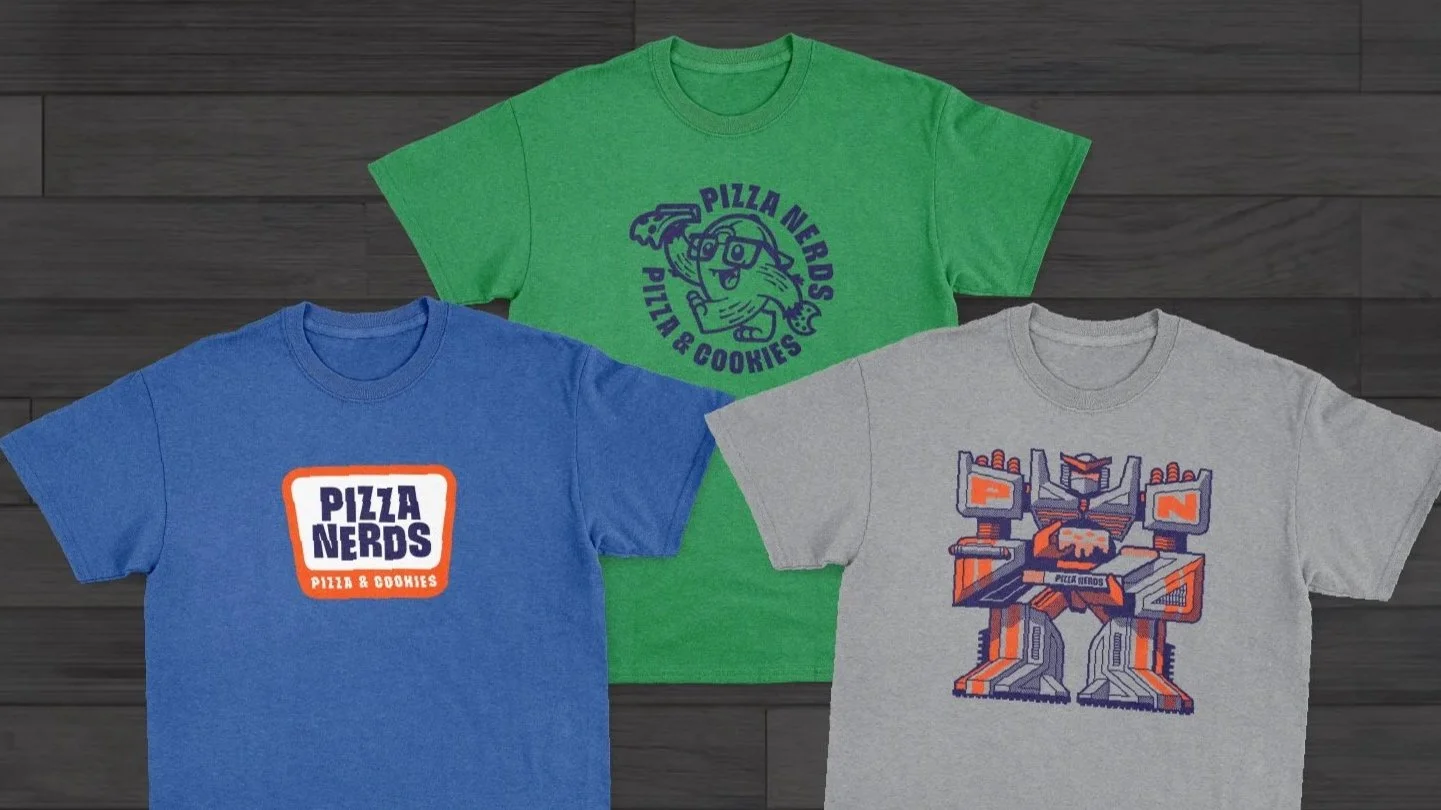
Projects like Pizza Nerds, Dola Jean’s, and the Snowville Creamery branding all began by identifying what made those organizations unique before exploring visual solutions. That strategic foundation is what creates memorable identities—not clever artwork alone.
4. Connects With Your Ideal Customer
The best logo in the world is meaningless if it appeals to the wrong audience.
A luxury food brand shouldn't look like an energy drink.
A children's museum shouldn't look like a law firm.
Every design decision should help your ideal customer immediately feel, "This is for me."
The recent Lift & Coast packaging project is a great example. Rather than relying on clichés common in the cannabis category, the branding uses clean typography, geometric forms, and a fresh color system to communicate a modern, approachable premium product that stands apart on the shelf.
5. Is Uniquely Ownable
Can customers recognize it instantly? Is it memorable? Is it unique enough to avoid confusion? Can it be protected as your intellectual property?
Your logo becomes one of your company's most valuable business assets. Investing in an original identity gives you something you can build equity around for decades—not something that blends into a sea of look-alike brands.
Great logos are built on strategy.
A logo isn't the brand. It's the face of the brand.
That's why our process at Slagle Design always begins with listening. Before discussing colors or typography, we work to understand your business, your customers, and what makes your company worth remembering.
Design isn't about decorating—it's about solving problems and building trust. A successful logo isn't measured by how many compliments it receives from other designers. It's measured by how effectively it helps your business connect with the people you want to reach.
When your logo is simple, meaningful, distinctive, customer-focused, and truly ownable, it becomes much more than a graphic. It becomes the foundation of a brand people remember—and one they're proud to recommend.