
Hiring a Graphic Designer vs. DIY Logo Tools
When you need a logo, it is incredibly tempting to jump online and let an algorithm generate something in seconds. But a graphic designer is like any other service or product—you always get what you pay for. You can DIY the plumbing in your house, but a seasoned plumber is always going to do a better job and make sure your valuables don't end up underwater.
Today, more than ever, there are hundreds of websites where you can trust AI or crowdsourcing platforms to create inexpensive logos. But before you click “generate,” you need to understand exactly what you are—and aren’t—getting.
The Hidden Costs of a "Cheap" Logo
Skipping the human process and opting for a $50 crowdsourced or AI-generated logo often leads to expensive headaches down the road. Here are the major risks:
Trademark Issues: AI-sourced logos cannot be trademarked, meaning you cannot protect your logo against anyone else using the same mark.
Derivative Artwork: AI generators are trained on existing art, meaning the logo they spit out is likely a derivative of someone else's trademarked logo anyway.
Recycled Concepts: Many inexpensive crowdsourcing websites reuse and recycle the logos they sell. Again, this prevents you from owning or trademarking your brand identity.
The Lawsuit Nightmare: If you use a crowdsourced logo that has already been sold to—and trademarked by—someone else, you are opening yourself up to a lawsuit. If you are forced to rebrand, you will have to pay to reprint all your packaging, recreate your signage, and change all your uniforms. It is an incredibly costly mistake.
Never work with a graphic designer who doesn’t take the time to get to know you, help you craft your unique story, and create a truly ownable logo.
The “Human-Created Design” Difference
A good designer seeks to have a full knowledge of their client's business, their best practices, and how they differentiate themselves from the competition. An algorithm cannot do that.
At Slagle Design, we practice what we call “Human-Created Design.” To truly understand a brand, a designer needs to:
Visit the client’s store, factory, campus, production facility, kitchen, or restaurant.
Interview stakeholders and employees.
Take the time to deeply understand the specific industry the client is in.
You have to get to know a client well enough to position them in a way that makes them stand out.
Case Study: Snowville Creamery
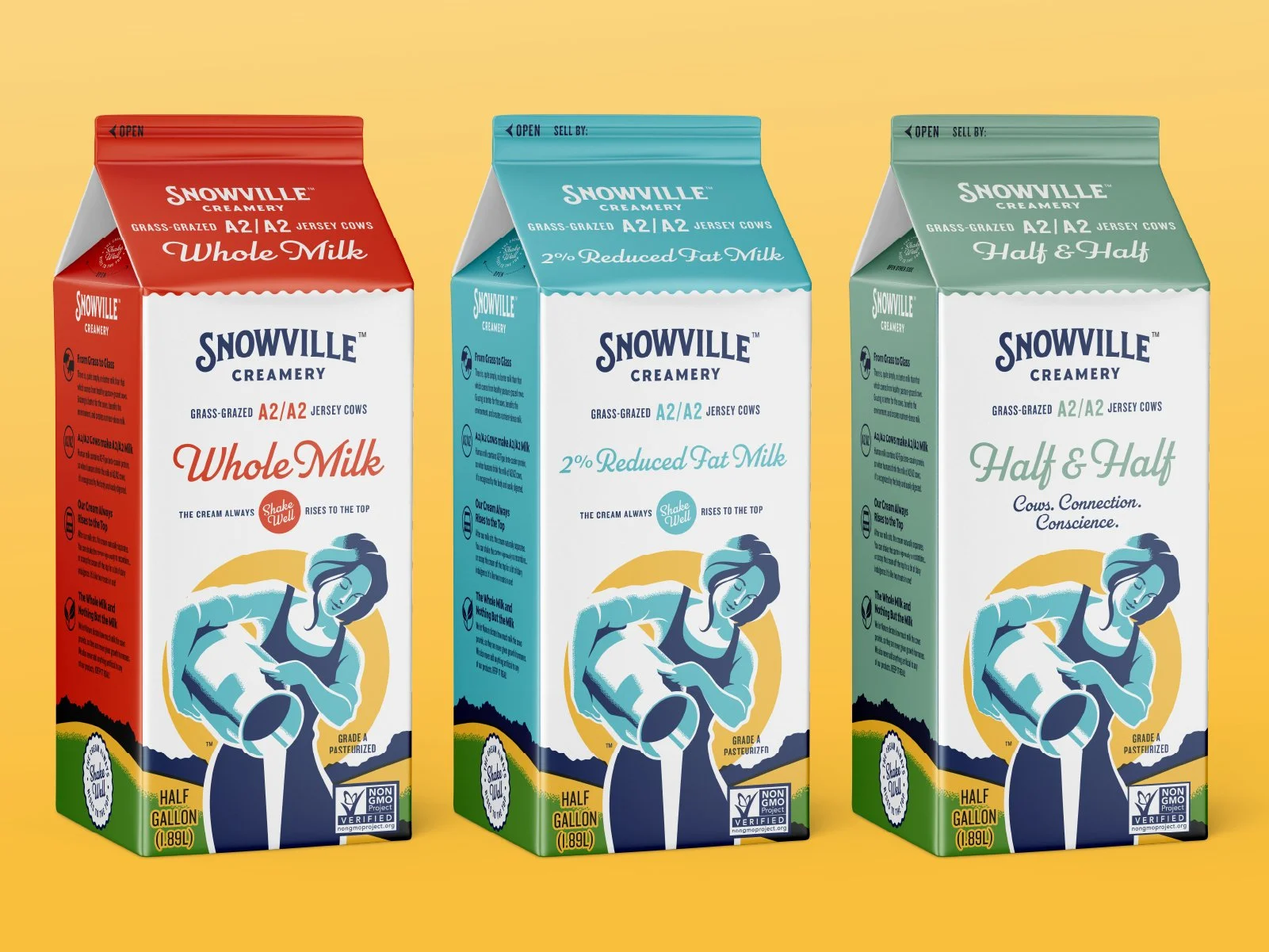
Our rebrand for Snowville Creamery is a perfect example of why boots-on-the-ground research is irreplaceable. We didn’t just send them a questionnaire; we drove an hour and a half to their location, put on hairnets, and walked through every single step of their process—from collecting milk to manufacturing their cheeses, sour creams, and yogurts.
Understanding their unique process and seeing the care they put into every step showed us how much they love their customers. They do things the long, often expensive, and arduous way to make the best possible product, completely rejecting the mass-market homogenization that takes all the good stuff out of dairy.
Their new packaging needed to reflect the way dairy products used to be made. We gave their logo a retro Americana feel that takes you back to the days when milk was delivered to your doorstep by people who cared about their community and the quality of their product. You can read more about the thought process behind this rebrand in this Columbus Underground feature.
More Than Just a JPEG
Aside from getting a proper logo that actually reflects your brand story and personality, DIY tactics often lead to incomplete products. Many times, an automated tool will only deliver a low-resolution JPEG.
When you work with a professional, you receive a full branding package. This ensures your brand is ready for the real world:
Logos in various formats, including vector-based files for scaling.
Multiple iterations for when the logo has to be used in one color or reversed out on a dark background.
Properly specified brand colors.
A unique, curated set of fonts.
Patterns and textures to support the visual identity.
Brand guidelines that give your team a framework to use the brand consistently everywhere it lives.
A logo is the face of your business. Don’t leave it up to an algorithm that doesn’t know who you are.